


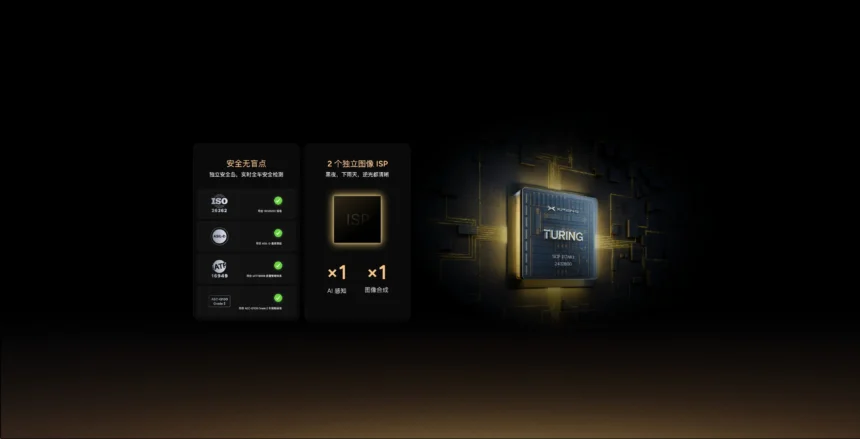
Xpeng has unveiled its self-developed Xpeng Turing AI chip, a 40-core processor built for artificial intelligence applications. According to the automaker, the chip can run large models with up to 30 billion parameters locally and integrates two neural network processing units (NPUs). Xpeng said it completed a validation run of an intelligent-driving function on the Turing chip in October and plans to equip at least three Turing chips in future vehicle models.
Xpeng Turing AI Chip: Technical Deep Dive
The Turing chip uses a domain-specific architecture optimized for neural networks, which Xpeng says improves data-processing efficiency and overall intelligence performance. The chip’s two neural network processing units (NPUs) support on-device operation of large models with as many as 30 billion parameters.
On safety, Xpeng built an independent “security island” mechanism into the chip that performs real-time monitoring of vehicle safety, which the company says strengthens driving safety. The chip also includes two independent image signal processors (ISPs) designed to handle complex lighting conditions such as darkness, rain and backlighting, intended to keep the perception system’s recognition accurate in extreme conditions.
Xpeng said deep customization allows the Turing chip’s computing power to be used at 100% utilization, which it describes as a foundation for future AI-vehicle intelligence development.
OEM Integration & Timeline
Xpeng said it completed a running validation of an intelligent-driving function on the Turing chip in October. The automaker plans to equip at least three Turing chips in future vehicle models to strengthen vehicle intelligent-processing and safety performance.
Industry Impact & Challenges
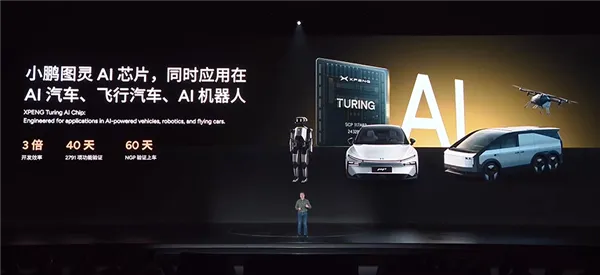
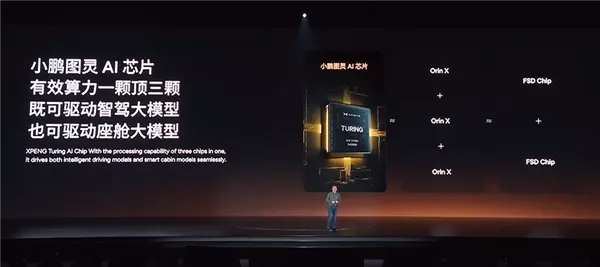
Xpeng describes the Turing chip as highly general-purpose and flexible, saying it applies not only to AI vehicles but also to AI robots and, potentially, future flying cars. Compared with general-purpose chips on the market, Xpeng says the Turing chip offers a “one chip equals three” advantage, capable of simultaneously driving autonomous-driving systems, Smart Cockpit large models and other applications.
Conclusion
Xpeng’s self-developed Turing AI chip combines a 40-core processor, two NPUs, local support for 30-billion-parameter models, a dedicated security-monitoring mechanism and dual ISPs for difficult lighting conditions. The automaker says the chip’s flexibility extends beyond AI vehicles to AI robots and potential future flying cars, and it plans to deploy at least three Turing chips per future vehicle model.